Technische tips
Open-ear vs in-ear vs bone conduction: which earbuds are right for you
Three ways to get sound into your ears, three very different experiences. Here's how each one really performs in 2026 — and the honest answer to which suits your life.

"Which earbuds should I buy?" has stopped being a simple question. Sealed in-ear buds still rule for pure sound, but a wave of open-ear and bone-conduction designs now offer something they can't: your music and the world at the same time. Here's the honest breakdown, without the marketing gloss.
The short version
Want the best sound and noise isolation? Sealed in-ear. Want to stay aware of traffic, colleagues and your surroundings while you listen? Open-ear is the sweet spot — better sound than bone conduction, far more awareness than in-ear. Bone conduction is the rugged, ear-free extreme for hardcore outdoor use.
The three ways earbuds deliver sound
In-ear buds seal your ear canal and fire sound straight at the eardrum — the classic AirPods-style fit. Open-ear buds sit just outside the canal and beam sound in without sealing it, so your ears stay open to the room. Bone conduction skips the eardrum entirely, vibrating sound through your cheekbones while your ears stay completely free.
The honest truth about sound quality
Let's be straight: for raw audio, sealed in-ear wins — it isolates you and delivers the deepest bass. Open-ear is the surprise: because it still fires into the ear canal, it sounds noticeably clearer and fuller than bone conduction, while keeping you connected to your surroundings. Bone conduction is the trade-off pick — weaker bass and a lighter sound, chosen for freedom, not fidelity.
The 2026 shift: open-ear air-conduction designs have improved fast, and for most people they've become the more versatile everyday choice than bone conduction.
Awareness, comfort and fit
This is where open-ear earns its place. Nothing plugs your ear, so there's no pressure, no "blocked" feeling and no ear fatigue on long days — and you hear traffic, announcements and the person next to you. It's why runners, cyclists and open-plan workers are switching. Open-ear buds come in a few fit styles in 2026 — a clip that cuffs the ear rim, a hook that rests over it, or a ring that sits gently in the outer ear — all designed to stay put without sealing you off.
Open-ear vs in-ear vs bone conduction, side by side
| What matters | Open-ear | In-ear (sealed) | Bone conduction |
|---|---|---|---|
| Awareness | Stay fully aware | Blocks the room | Fully aware |
| Sound quality | Clear & balanced | Best overall | Lightest, weaker bass |
| Noise isolation | None (by design) | Strong | None |
| Comfort | Nothing in-ear | In-ear pressure | Cheekbone pads |
| Best for | Run · cycle · office | Commute · focus | Trail · water |
| Typical price | From £32.49 | £30–250 | £40–160 |
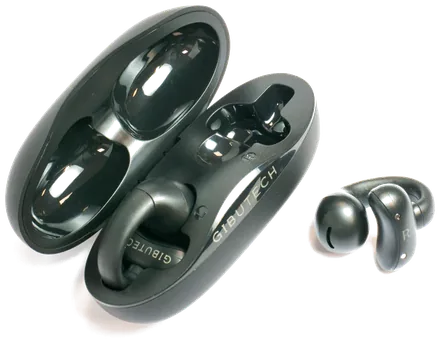
The open-ear pick
Ultra Open earbuds
Open-ear sound, IP55 sweat resistance, dual ENC mics — stay aware without the £200 price tag.
£32.49Shop now →
Open-ear isn't a compromise any more — for everyday life, it's arguably the most versatile earbud you can wear.
When to choose sealed noise cancelling instead
Being honest: open-ear is not for everyone. If you want to shut the world out on a loud commute, block a noisy office or sink into a film, you want the opposite — a sealed pair with active noise cancelling. You don't need to spend big for it either.
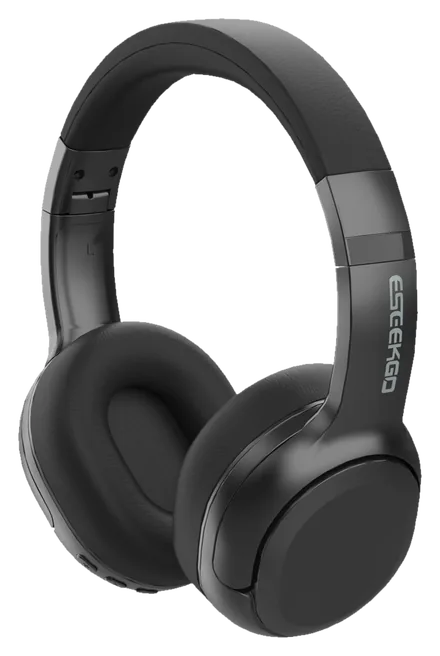
When you want silence
Foldable NC headphones
Active noise cancelling that folds into any bag — serious quiet for under £25.
£20.59Shop now →
So, which one is you?
Stay aware and comfy, or shut the world out. Both under £35.
Ultra Open
Hear music + the world
£32.49
Foldable NC
Shut the world out
£20.59
Veelgestelde vragen
Are open-ear earbuds any good for sound?
Yes. Because open-ear buds still fire sound into the ear canal (rather than through the cheekbone), they sound noticeably clearer and fuller than bone conduction, with respectable bass. Sealed in-ear buds still win for pure isolation and deep bass, but for everyday listening open-ear holds its own.
What's the difference between open-ear and bone conduction?
Open-ear beams sound into your ear canal without sealing it, so it keeps decent sound quality while staying aware. Bone conduction skips the eardrum entirely and vibrates sound through your cheekbones — maximum awareness and ear-free comfort, but a lighter sound with weaker bass.
Are open-ear earbuds good for running?
They're ideal. You hear traffic and your surroundings for safety, there's no in-ear pressure on long runs, and sweat-resistant models like the Ultra Open (IP55) handle rain and workouts.
Do open-ear earbuds leak sound to people nearby?
A little, at high volume in a very quiet room — that's the trade-off for not sealing your ears. At normal listening levels in everyday settings, leakage is minimal and rarely an issue.


