
Why You Still Need a 3.5mm Audio Cable for Modern Devices
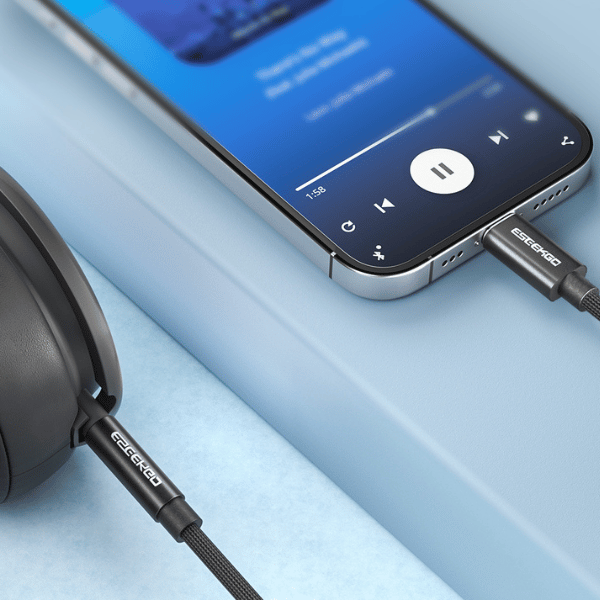 Wired audio delivers zero latency, zero compression, and zero battery anxiety — here is why the 3.5mm cable is not going away
Why you still need a 3.5mm audio cable for modern devices
Five situations where wired audio beats wireless every time, and the exact cable or adapter you need for each modern device combination.
- The 3.5mm headphone jack has been removed from iPhones since 2016 and from most Android flagships since 2019, but the 3.5mm audio standard itself has not been replaced. Car stereos, aircraft entertainment, studio monitors, and the majority of the world's headphones still use it.
- The solution is an adapter, not an upgrade: USB-C to 3.5mm (iPhone 15+, most Android) or Lightning to 3.5mm (iPhone 14 and earlier) converts your phone's digital port to an analogue audio output.
- Wired audio delivers zero latency and zero compression compared to Bluetooth's 40 to 200 ms delay and codec-compressed audio stream.
- A quality braided aux cable with gold-plated connectors lasts years and provides a cleaner signal than cheap alternatives. It is a one-time purchase worth making correctly.
The 3.5mm audio jack disappeared from smartphones starting with the iPhone 7 in 2016. The assumption was that wireless would replace it entirely within a few years. Eight years later, car stereos, aircraft entertainment systems, studio monitors, mixing desks, gaming headsets, gym equipment, and the majority of the world's wired headphones all still use 3.5mm. The jack did not disappear from the world. It disappeared from your phone. A good adapter or cable closes that gap permanently.
In which situations is a 3.5mm cable still the best option?
1. Car stereos and older speaker systems. Most car aux ports are 3.5mm. A cable connecting your phone directly to your car stereo delivers better audio than FM transmitters and avoids Bluetooth pairing dropouts on older vehicles.
2. Aircraft entertainment systems. All aircraft seat headphone jacks are 3.5mm. You cannot use Bluetooth headphones with the armrest screen. A compact braided aux cable is the only option.
3. Studio and reference monitoring. Audio engineers use wired monitors for zero-latency playback during recording and editing. Bluetooth's 40 to 200 ms delay makes it unusable for synchronised audio work.
4. Wired headphone collections. High-quality wired headphones often outperform Bluetooth equivalents at the same price point, because the budget goes to drivers and build rather than wireless chipsets and batteries.
5. Battery-free reliability. A wired connection never needs charging. In a long meeting, a long flight, or a low-battery situation, wired audio is simply available when wireless is not.
Is wired audio actually better quality than Bluetooth?
For casual listening, the practical difference between a good Bluetooth codec (AAC, aptX) and a quality wired connection is small. For specific use cases, the differences are significant:
Exhibit 1 — Wired vs Bluetooth audio comparisonWatching video with Bluetooth headphones at 100 ms delay means audio arrives a tenth of a second after the visual. Your brain compensates for small delays, but above 80 ms you start to notice lip sync issues. For gaming, video editing, and any audio-visual synchronisation task, wired is the correct choice.
Which 3.5mm audio cable or adapter do I need for my phone?
Modern phones removed the 3.5mm jack but retained the ability to output audio through their primary port. The right cable depends on which port your phone has:
Exhibit 2 — Device compatibility matrixDoes cable quality actually affect audio quality?
Yes, for three specific reasons:
- Connector oxidation. Cheap connectors oxidise over time and degrade contact quality, introducing signal noise and channel imbalance. Gold-plated connectors resist oxidation and maintain consistent contact for years.
- Electromagnetic interference (EMI). Unshielded cables pick up interference from nearby electronics, which manifests as hiss or buzz in the audio signal. Braided or foil-shielded cables block this interference.
- Physical durability. The failure point of most cables is the connector housing, where repeated bending causes internal wire breakage. Strain relief at the connector and a flexible braided jacket extend the cable's working life significantly.
USB-C to 3.5mm: Braided nylon audio cable for iPhone 15+, Android. Gold-plated connectors, shielded signal, full TRRS microphone support.
Lightning to 3.5mm: MFi-certified audio cable for iPhone 7 through iPhone 14. Gold-plated connector, braided nylon, TRRS compatible.
3.5mm to 3.5mm aux cable: Braided stereo aux cable for car stereos, speakers, aircraft, and laptop connections. Gold-plated TRS connectors, 1 metre length.
A quality aux cable is a one-time purchase. Buy once, and stop replacing it.
The case for keeping a cable in your bag
Wireless audio has its place. But a compact braided aux cable takes up almost no space and solves every wired audio connection you will encounter: the car, the aircraft, the ageing speaker in the conference room, the colleague who lends you their wired headphones. Keep one in your bag alongside the charging cable. It is cheap, it is small, and the next time you need it you will be glad it is there.
Get Gibutech audio guides, cable tips, and exclusive deals delivered to your inbox.
SubscribeFrequently asked questions
Do iPhones still support 3.5mm audio?
Not directly. iPhones removed the 3.5mm jack with the iPhone 7. You use a USB-C to 3.5mm adapter (iPhone 15 and later) or a Lightning to 3.5mm adapter (iPhone 14 and earlier). View Gibutech audio cables and adapters →
Is wired audio better than Bluetooth?
Wired audio delivers zero latency and no compression. Bluetooth introduces 40 to 200 ms delay and applies lossy codecs. For casual listening the difference is small. For video editing, gaming, or studio monitoring, wired is preferable for accuracy and synchronisation.
What cable do I need to connect my phone to a car stereo?
A USB-C to 3.5mm cable (or Lightning to 3.5mm for older iPhones) connects your phone's port to the car's aux-in socket. Browse Gibutech audio cables → for the correct cable for your device.
Does aux cable quality affect sound quality?
Yes. Oxidised connectors cause noise and channel imbalance. Unshielded cables pick up electromagnetic interference. Braided nylon cables with gold-plated connectors resist both problems and last significantly longer than cheaper alternatives.
Can I use a 3.5mm aux cable as a microphone input?
Only with a TRRS (4-pole) cable that carries both audio output and microphone input on the same connector. A standard TRS (3-pole) cable only carries stereo audio out. Gibutech audio cables support TRRS for headsets with built-in microphones.
- Apple Inc. "iPhone 7 technical specifications." Apple Support, 2016. First iPhone to remove the 3.5mm headphone jack; Lightning to 3.5mm adapter included.
- Bluetooth Special Interest Group (SIG). Bluetooth Audio Codec Comparison. SBC: up to 328 kbps; AAC: up to 250 kbps; aptX HD: up to 576 kbps at 24-bit/48 kHz.
- Audio Engineering Society (AES). "Latency standards for professional audio." AES Technical Document, 2022. Acceptable latency for live audio work: below 10 ms.
- IEC 60603-11. "Connectors for audio equipment; 3.5mm jack specifications." International Electrotechnical Commission, 2006.
- Product specifications sourced from Gibutech product pages at gibutech.co.uk as of June 2026.